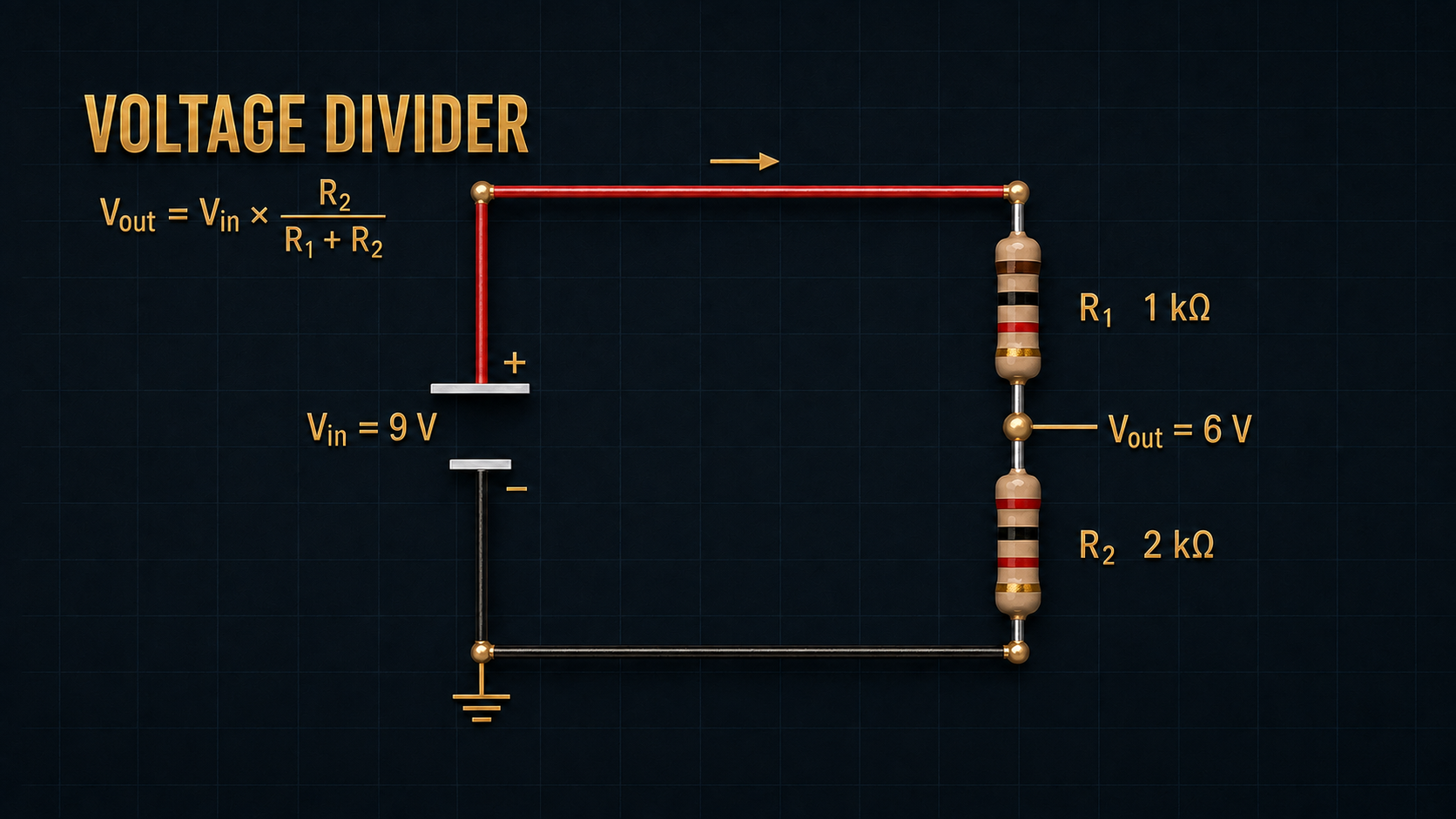
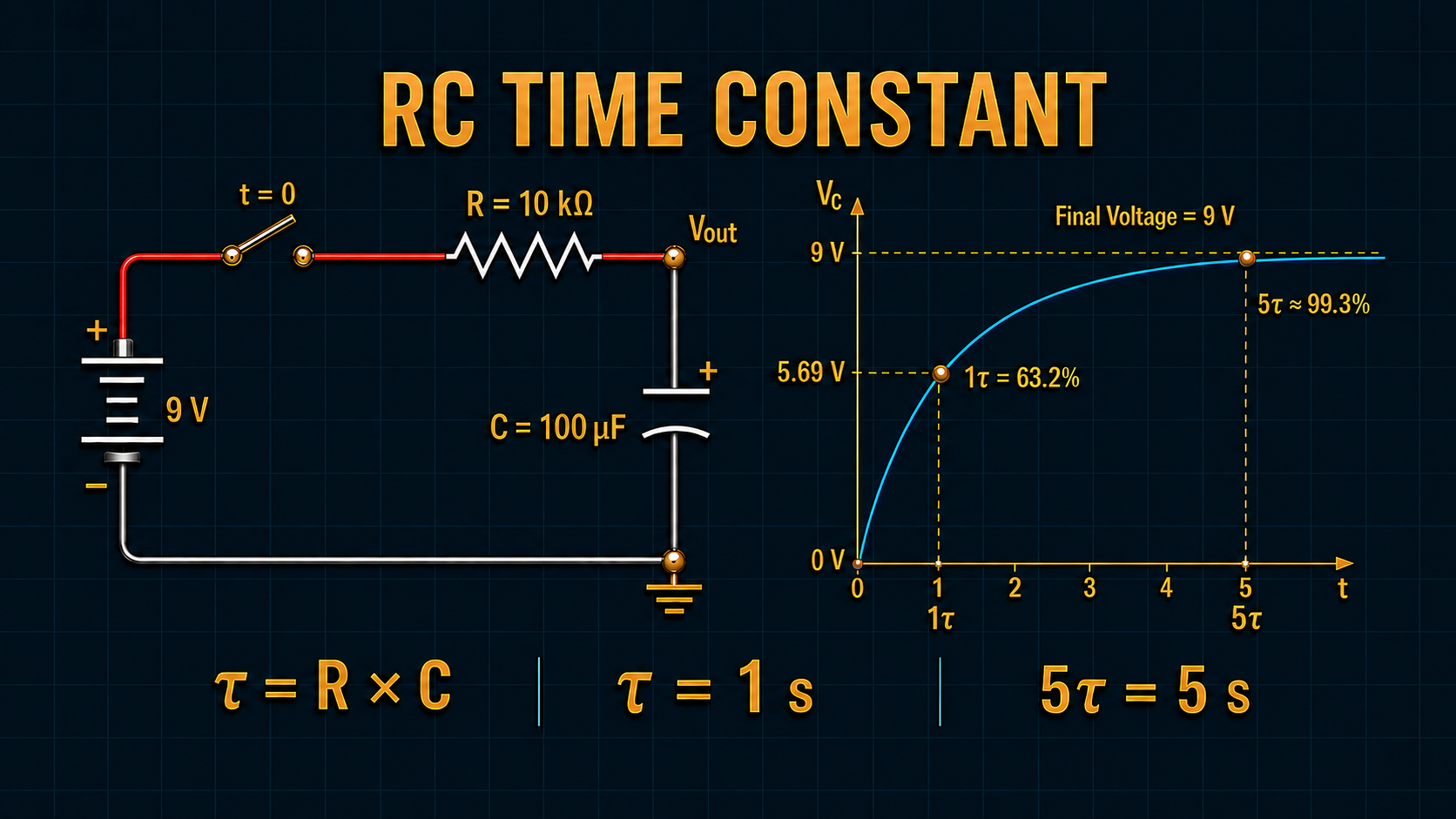
Try it
Brown
Black
Black
Brown
Brown
Understand the result
What's going on
Precision resistors need more than two significant digits to say what they mean, so they trade one of the multiplier’s shortcuts for an extra digit of accuracy. Same idea as the 4-band code, one more band of resolution.
The formula
R = (D1 × 100 + D2 × 10 + D3) × Multiplier
D1, D2, and D3 are the first three digits, read from the band nearest the resistor’s edge inward.
Show the derivation, mnemonic, and worked example
Build it up
Where a 4-band resistor spells out a two-digit number, a 5-band resistor spells out three digits before the multiplier kicks in. That’s the whole difference - everything else about reading the bands works exactly the same way, left to right.
Worked example
Worked example
Bands: Brown, Black, Black, Brown, Brown
Digits: 1, 0, 0 → 100
Multiplier: Brown → ×10
R = 100 × 10 = 1,000 Ω = 1 kΩ ± 1%