Try it
Understand the result
What's going on
Binary arithmetic works exactly like decimal arithmetic - you just run out of digits sooner. Where decimal carries after 9, binary carries after 1. Same rules, smaller alphabet.
The formula
decimal(a) [op] decimal(b), converted back to binary
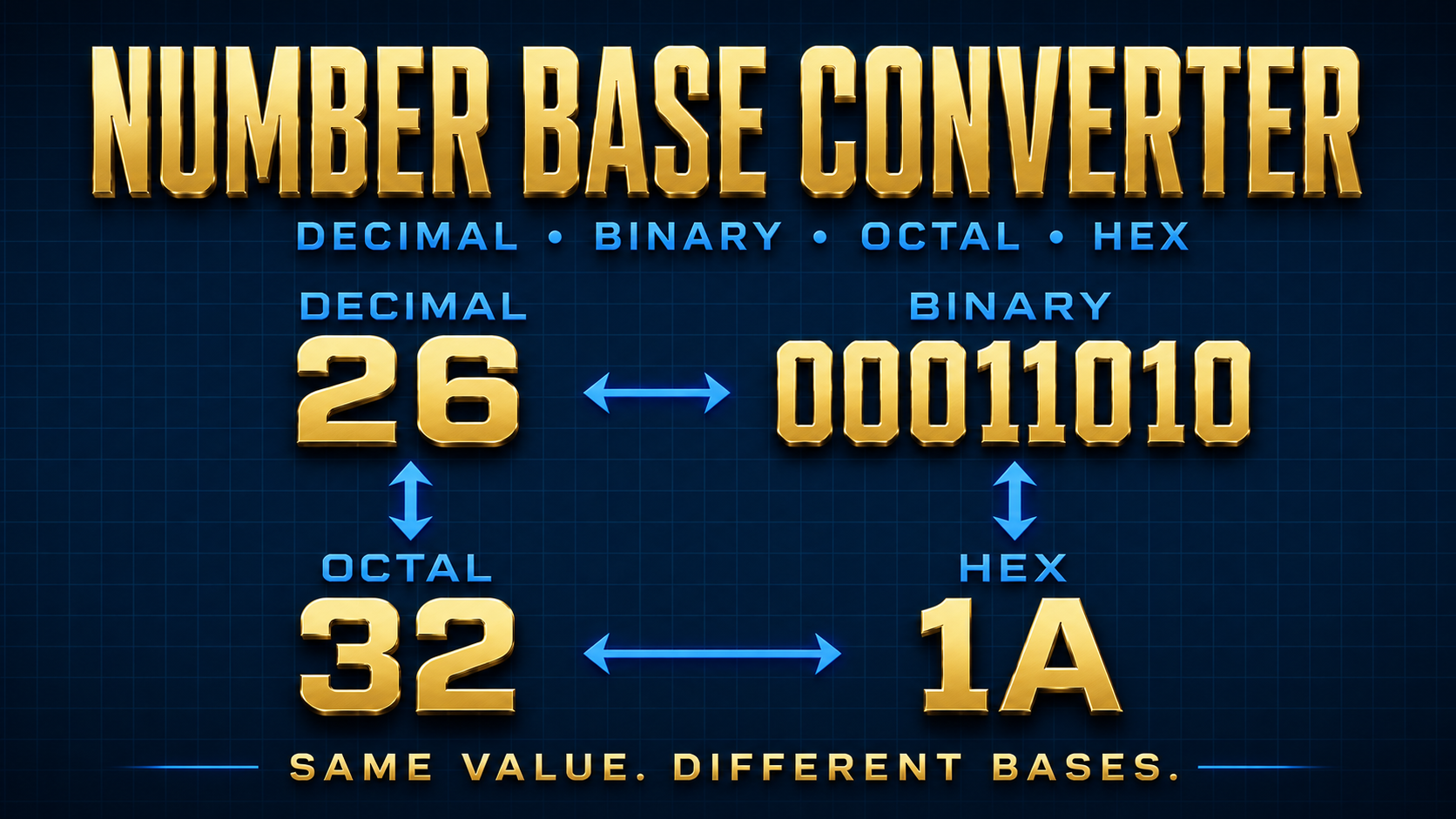
The easiest way to do it by hand is exactly that: convert each binary number to decimal, do the arithmetic you already know, then convert the answer back.
Show the derivation, mnemonic, and worked example
Build it up
Line the two binary numbers up by place value, just like long addition in decimal. Add column by column from the right; any time a column sums to 2 or more, write down the remainder and carry a 1 into the next column. Subtraction, multiplication, and division follow their decimal-arithmetic counterparts the same way, just base 2 instead of base 10.
Worked example
Worked example
1010 (10) + 11 (3)
10 + 3 = 13
13 in binary = 1101