Try it
Understand the result
What's going on
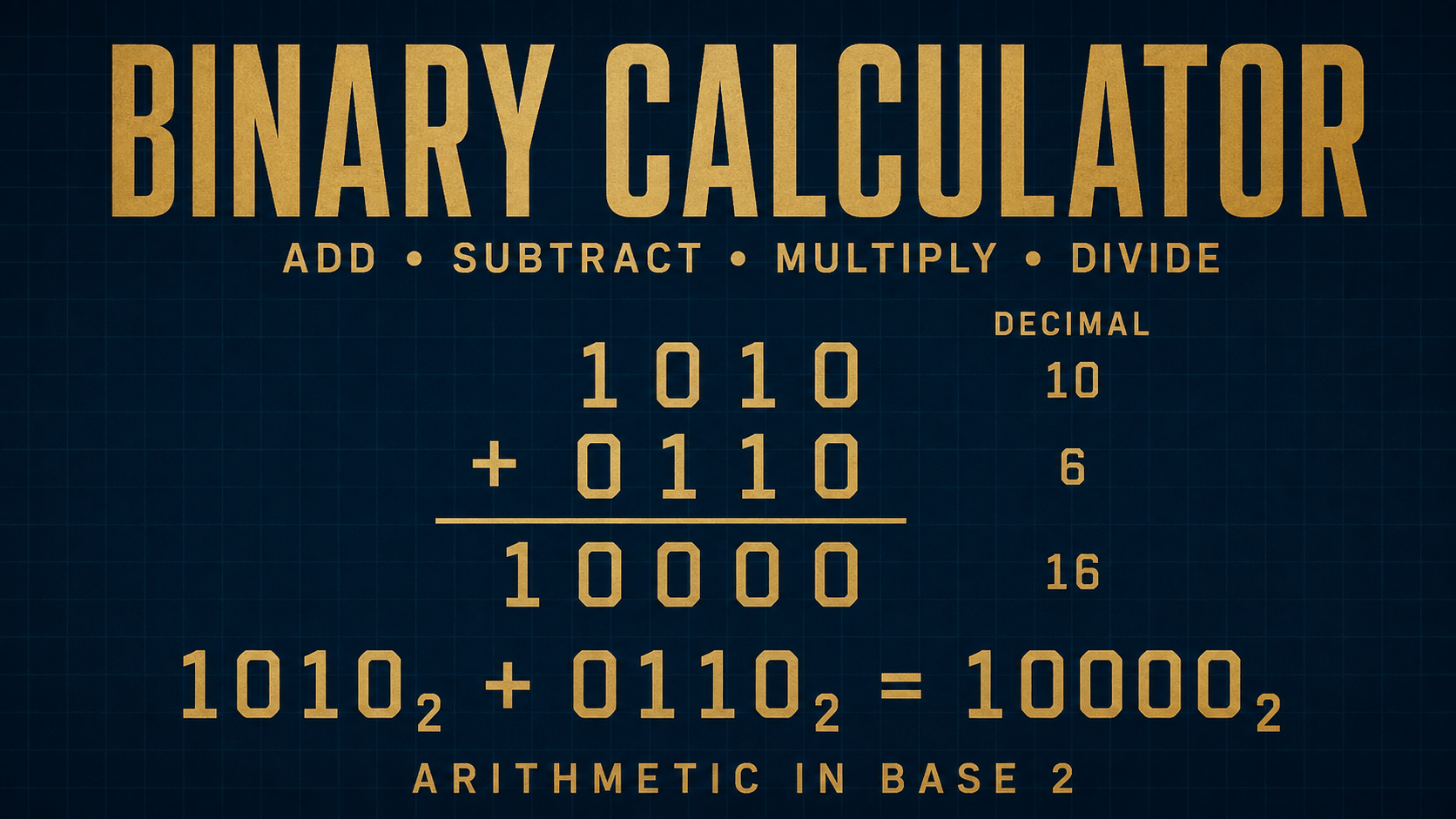
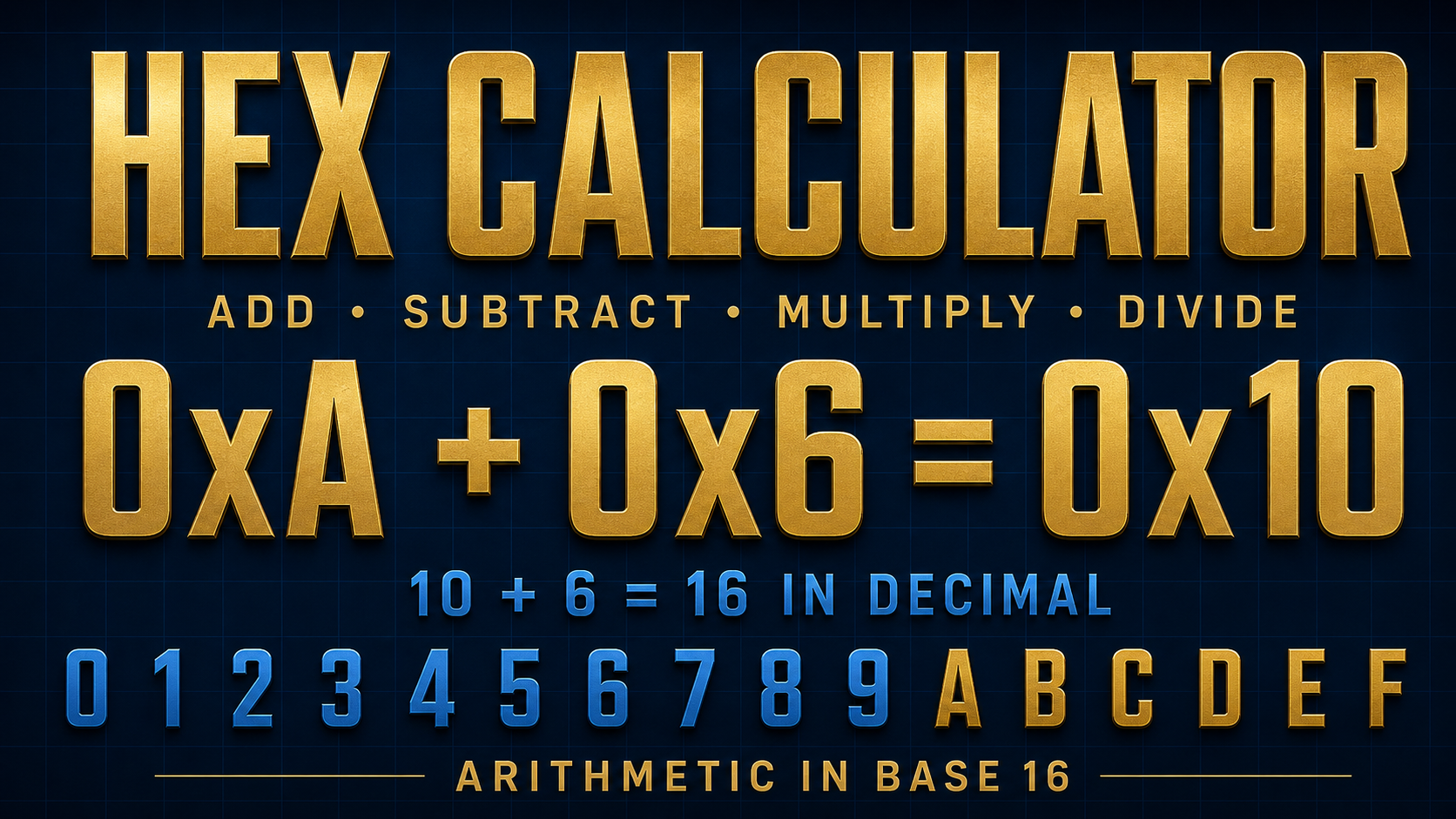
A number doesn’t change just because you write it differently - 42, 101010, 52, and 2A are all the exact same quantity, just counted in groups of ten, two, eight, and sixteen. Base just decides how many symbols you get before you have to carry into the next column.
The formula
value = Σ (digit × base^position)
Read right to left, each digit is worth the digit times the base raised to how many places it sits from the end.
Show the derivation, mnemonic, and worked example
Build it up
Decimal carries every 10 because it has ten digits (0 to 9). Binary carries every 2 because it only has two (0 to 1) - which happens to match a transistor being on or off, so computers think natively in it. Octal groups binary three bits at a time (2³ = 8), and hex groups it four bits at a time (2⁴ = 16), which is why hex shows up constantly in memory addresses: one hex digit is exactly one nibble.
Worked example
Worked example
Decimal 42
42 ÷ 2 repeatedly → binary 101010
Group in fours: 0010 1010 → hex 2A
Group in threes: 101 010 → octal 52