Try it
Understand the result
What's going on
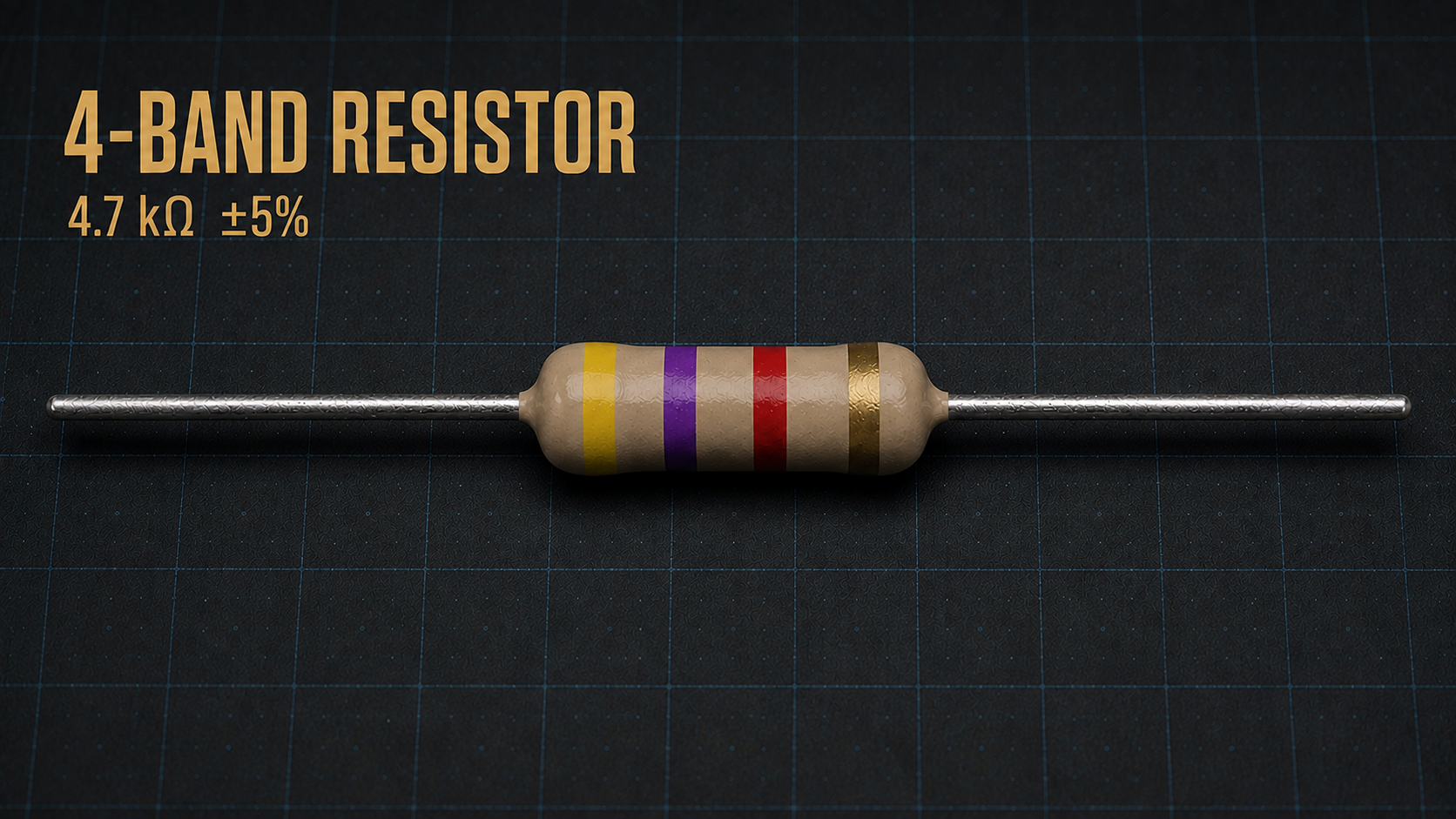
Small ceramic capacitors are too tiny to print a full value on, so manufacturers stamp a three-digit shorthand instead - the same space-saving trick resistors solve with color bands, capacitors solve with a compact numeric code.
The formula
C (pF) = (D1D2) × 10^D3
Where D1D2 is the two-digit significant number and D3 is the multiplier digit.
Show the derivation, mnemonic, and worked example
Build it up
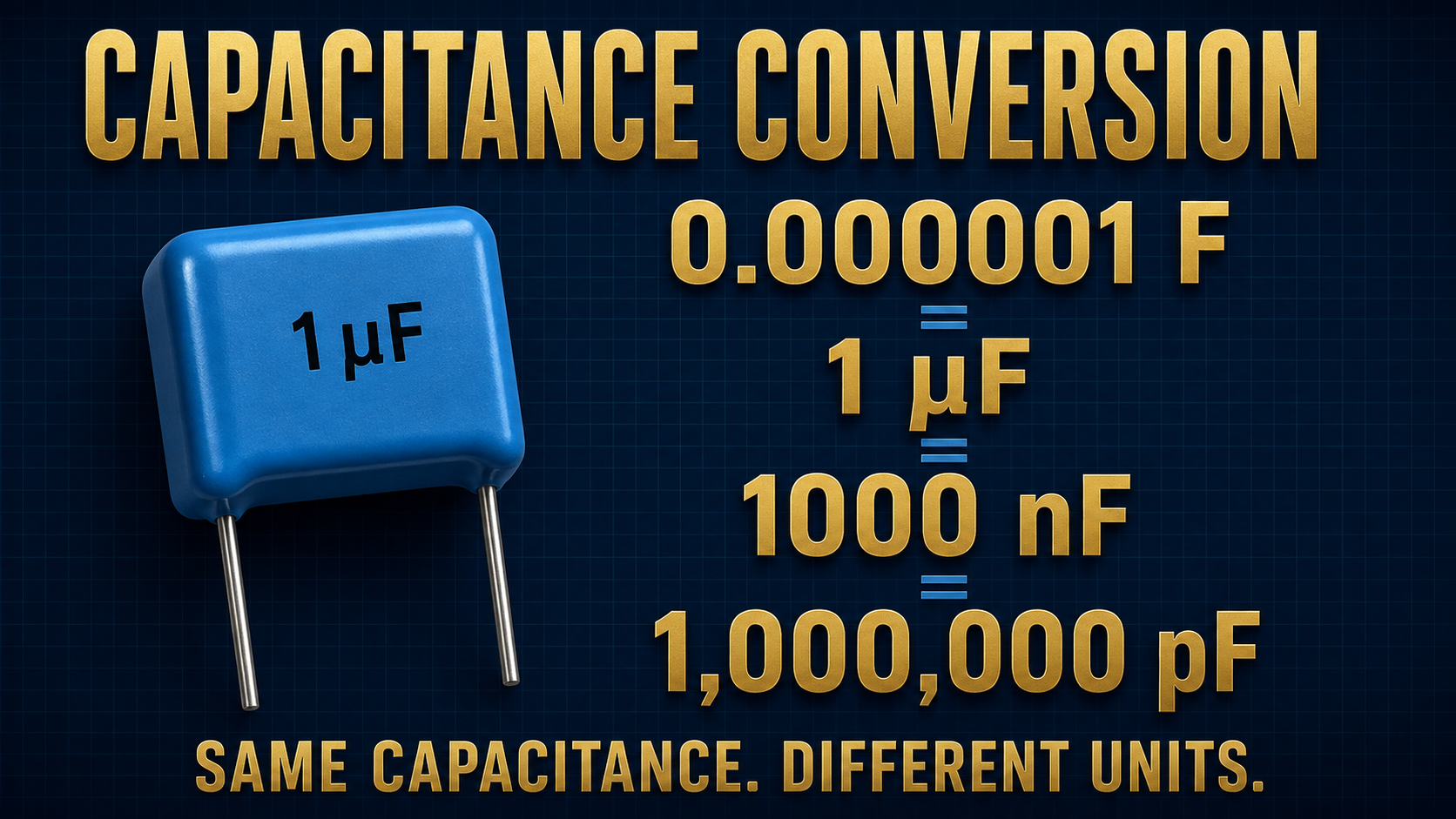
The first two digits are significant figures, spelling out a two-digit number. The third digit is a multiplier - how many zeros to add - and the result is always in picofarads, the smallest practical capacitance unit, which is why even a “small”-looking code can decode to a surprisingly large value once converted to nanofarads or microfarads.
Worked example
Worked example
Code: 104
Significant digits: 10
Multiplier: 10⁴
10 × 10,000 = 100,000 pF = 100 nF = 0.1 µF